
Florida homes get dirty faster than homes almost anywhere else in the country, and most homeowners do not realize it until the streaks are already visible. How often should you pressure wash your house in Florida depends on the surface, the amount of shade and moisture around your property, and the time of year, but there is a clear answer for each part of your home.
Here is exactly how often to clean every surface, plus the signs that tell you it is time sooner rather than later.
Key Takeaways
- Most Florida homes benefit from exterior cleaning once a year, and sometimes twice in high-growth or coastal areas.
- Roofs, driveways, and siding can follow slightly different timelines.
- Visible mold, green growth, dark streaks, and slippery surfaces are clear signs it is time to clean.
- Scheduling before the rainy season or hurricane season often delivers longer-lasting results.
- Matching the right method to each surface protects your property and improves results.
Recommended Pressure Washing Schedule by Surface
| Surface | Typical Frequency in Florida | Notes |
| House siding and walls | Every 12 months | High-humidity or shaded homes may need it every 8–10 months |
| Roof | Every 12–24 months | Depends on growth rate and roof material |
| Driveway and walkways | Every 12 months | High-traffic or tree-covered areas may need more frequent attention |
| Pool decks and lanais | Every 12 months or as needed | Organic growth returns quickly in shaded, moist areas |
These are general guidelines. Actual timing depends on your specific location, surrounding trees, and how quickly growth returns.
Why Pressure Washing Florida Homes Needs a Different Schedule
Pressure washing Florida homes requires a shorter interval than in many other parts of the country. High humidity and warm temperatures create ideal conditions for algae, mildew, and mold. Salt air near the coast accelerates surface dulling and buildup. Heavy rain and pollen seasons add another layer of grime.
Waiting too long allows growth to embed more deeply, which makes cleaning harder and increases the chance of staining or surface wear. Regular cleaning keeps the exterior looking better and reduces the effort needed on each visit.
7 Signs Your Florida Home Is Due for Cleaning
Green or Black Growth on Exterior Surfaces
Green or black patches on siding, trim, or walls are among the most common early warnings. In Florida’s climate this growth spreads quickly, especially on north-facing and shaded areas.
Mold on House Exterior Florida Home
Mold on house exterior Florida properties is a frequent issue. Once mold appears, it continues to spread until it is properly treated and removed. Soft washing is often the preferred method for siding and painted surfaces because it addresses the growth at the root.
Slippery Driveways or Walkways
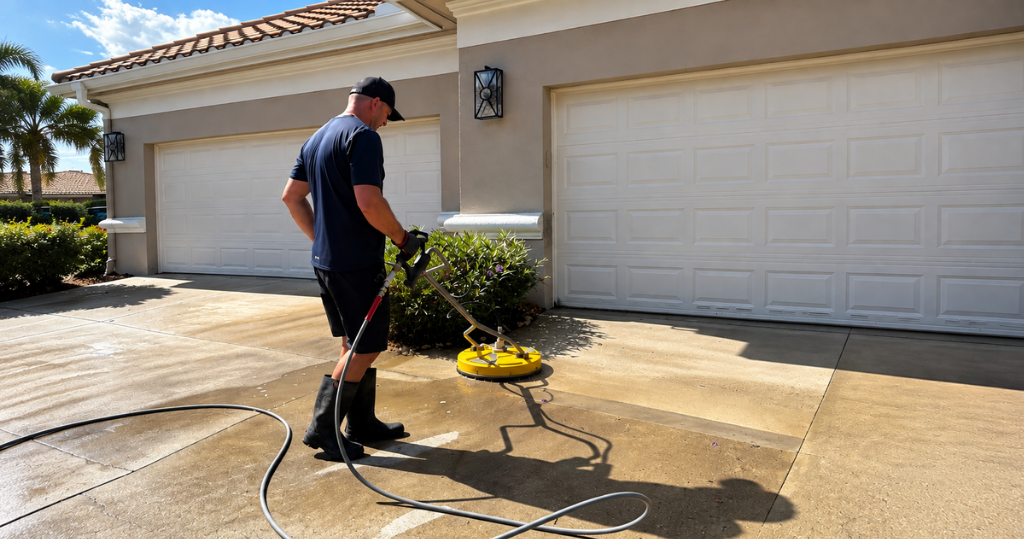
When concrete or pavers become slick, organic growth or algae is usually present. This is both a cleaning issue and a safety concern. How often pressure wash driveway Florida homes need attention often depends on shade, tree cover, and foot traffic.
Dark Streaks or Heavy Roof Discoloration
Black streaks on asphalt shingles are typically caused by algae. Left alone, the growth can hold moisture and affect the roof’s appearance and longevity. This is one of the main reasons homeowners ask how often pressure wash roof Florida properties should be cleaned.
Dirt, Pollen and Grime Building Up
Even without heavy organic growth, pollen, dust, and dirt accumulate faster in Florida than in drier climates. When the house starts looking dull or uneven, it is usually time for a refresh.
Staining Around Sprinklers or Pool Areas
Hard water, fertilizer overspray, and constant moisture around irrigation and pool areas create localized staining and growth. These spots often need attention sooner than the rest of the house.
Growth Returning Soon After Cleaning
If algae or mildew returns within a few months of the last cleaning, the previous method may not have fully addressed the problem, or the property’s conditions simply require a tighter schedule.
When Is the Best Time to Pressure Wash in Florida?
Before Florida’s Rainy Season
Cleaning ahead of the rainy season removes the buildup that would otherwise get rained into a surface and take root faster once the wet months begin.
After Heavy Rain and Storms
Storms leave behind leaves, pollen, and organic debris that stick to damp siding and roofing. A wash shortly after clears that debris before it has a chance to feed new growth.
Pressure Washing Before Hurricane Season Florida Homeowners Should Consider
Many homeowners schedule pressure washing before hurricane season Florida arrives. Removing loose dirt, debris, and growth reduces the amount of material that can be driven against the house during high winds and heavy rain. It also makes post-storm inspections and cleanup easier.
How Often Should You Pressure Wash a Florida Roof?
How often pressure wash roof Florida homes need is typically every 1 to 2 years, though homes under heavy tree cover or with visible algae streaking may need attention closer to the 1 year mark.
A full pressure wash is not the right approach here. Roofs should always be cleaned using a low pressure soft wash, since high pressure strips the protective granules off asphalt shingles and shortens the life of the roof significantly.
Our Naples roof washing team uses soft wash methods calibrated specifically for Florida roofing, killing algae at the root without putting the shingles at risk.
Frequently Asked Questions
Is pressure washing once a year enough for a house?
It depends on the home’s exterior, weather exposure, shade, moisture, and how quickly dirt or organic growth returns. Some homes stay clean longer, while others need cleaning sooner because of mold, algae, pollen, or heavy outdoor exposure.
Should I pressure wash my house if it still looks clean?
Not always. If the siding, driveway, patio, or other surfaces are still clean and free from buildup, there may be no need for immediate pressure washing. Look for early signs such as green growth, dark stains, slippery areas, or visible grime.
What makes a house need pressure washing more often?
Moisture, shade, trees, pollen, rain, dirt, and heavy outdoor use all affect how quickly exterior surfaces become dirty. Homes surrounded by trees or areas that stay damp often need attention sooner than properties with good sunlight and drainage.
Should I pressure wash my house before or after the rainy season?
The better timing depends on local weather and the condition of the exterior. Cleaning before a period of heavy rain removes existing dirt and organic buildup, while cleaning after storms helps remove fresh dirt, pollen, and debris left behind.
Does pressure washing remove mold and algae from house siding?
Pressure washing can remove surface buildup, but the correct cleaning method depends on the siding material and type of growth. Organic growth often needs an appropriate cleaning solution and controlled pressure rather than simply using maximum pressure.
How do I know when my driveway needs pressure washing?
Look for dark stains, dirt buildup, algae, moss, or areas that become slippery when wet. You do not need to wait until the entire driveway looks heavily stained. Cleaning early can make the job easier than allowing buildup to accumulate.
Do homeowners really need a fixed pressure washing schedule?
Not necessarily. A better approach is to combine a general maintenance routine with visual inspection. If dirt, organic growth, stains, or slippery surfaces return quickly, the home may need cleaning sooner than a fixed annual schedule.
Ready to Keep Your Naples Home Clean and Protected?
Whether your driveway needs a refresh, your roof has visible streaking, or you simply want a maintenance schedule that fits your property, The Pressure Gurus can help.
As a trusted pressure washing company Naples homeowners rely on, we assess each surface individually and recommend a schedule built around your home, not a generic timeline. Call today for a free estimate.