
Choosing between power washing and soft washing depends on the surface you’re cleaning, the type of buildup, and how much pressure that material safely handles.
Power washing works well on many durable surfaces, while soft washing is better suited to roofs, siding, stucco, and other areas that need a gentler approach.
This guide explains the real differences, shows which surfaces need which approach, and helps you decide when to use power washing vs soft washing for lasting results.
Key Takeaways
- Power washing uses higher water pressure to remove dirt, grime, grease, and other buildup from durable surfaces.
- Soft washing uses low pressure with a cleaning solution to remove mold, mildew, algae, and other organic growth.
- Concrete and other hard surfaces often suit controlled power washing, while roofs, siding, and stucco often need soft washing.
- The safest choice depends on the surface material, its condition, and the type of contamination.
Pressure Washing vs Soft Washing: The Core Difference
Power washing and soft washing both clean exterior surfaces, but they rely on different cleaning methods. Knowing that difference helps you avoid using too much pressure where a gentler process is needed.
How Power Washing Cleans
Power washing uses pressurized water to remove dirt and buildup from hard exterior surfaces. The pressure provides the main cleaning force, making the method useful for concrete driveways, sidewalks, patios, and other durable materials.
The correct PSI, nozzle, spray distance, and technique still matter. More pressure does not always mean better cleaning. Using excessive pressure on the wrong surface can damage the material or its protective finish.
How Soft Washing Cleans
Soft washing uses low water pressure combined with a cleaning solution. The solution breaks down organic growth such as mold, mildew, and algae, while the low-pressure rinse removes the loosened material.
This approach reduces the need for aggressive pressure on delicate surfaces. It is commonly used for roofs, siding, stucco, and painted exterior surfaces where high pressure creates a higher risk of damage.
Pressure, Cleaning Method and Surface Risk
The main difference between Pressure Washing vs Soft Washing is how each method removes contaminants.
Power washing depends more on water pressure. Soft washing depends more on the cleaning solution and controlled rinsing. Neither method is automatically better for every surface.
The material, surface condition, type of buildup, and manufacturer’s cleaning recommendations should guide the choice.
Stucco and Exterior Walls
Stucco needs controlled cleaning. Aggressive pressure can damage the finish or force water into vulnerable spots. Soft washing is often the better choice when mold, mildew, algae, or other organic growth is the main problem.
Painted siding also needs care. Always check the condition of the paint first and follow the surface manufacturer’s recommendations before any cleaning begins.
Concrete Surfaces
Concrete is more durable than most exterior materials, which makes controlled power washing a practical option for dirt, grime, mud, grease, and surface stains.
This is where Soft Washing vs Power Washing for Concrete becomes useful. Soft washing handles organic growth well. Power washing provides stronger mechanical cleaning for heavy buildup. The key is still controlled pressure. Too much force can leave marks or damage worn concrete.
Wood Decks and Fences
Wood requires a gentler approach than concrete. High pressure held too close can damage the fibers, leave marks, or strip a protective coating.
A professional adjusts the pressure, nozzle, and spray distance based on the wood’s condition. The goal is to remove dirt and organic growth without roughening the surface.
Pavers, Brick and Stone
These materials need a method that protects both the surface and the joints. Strong pressure can loosen joint sand or damage older masonry.
For routine dirt and grime, controlled power washing often works well. When mold, mildew, or algae are the main issue, a cleaning solution with lower pressure is the safer option.
Siding, Lanais and Pool Areas
Siding and screened outdoor spaces collect dust, pollen, algae, and mildew. These areas need enough cleaning power to remove buildup without harming screens, paint, trim, or nearby materials.
For many homes, soft washing provides a safer approach for exterior walls and delicate zones. The process should also protect plants, furniture, pool equipment, and other items around the work area.
Which Method Should You Use on Each Surface?
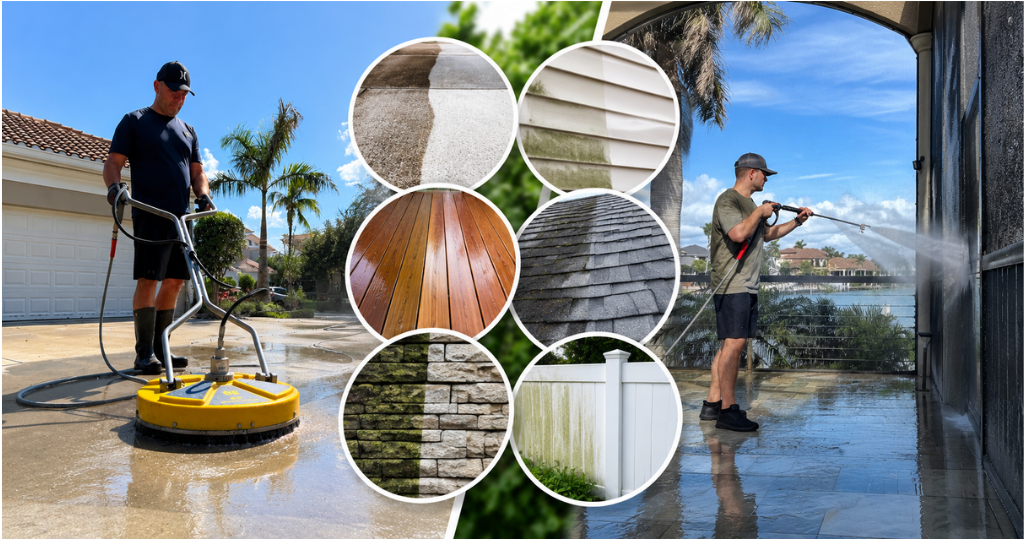
The best cleaning method changes from one part of your property to another. A concrete driveway needs a different approach from an asphalt roof or painted stucco wall.
Roofs: Soft Washing vs Power Washing
Roofs require extra care because roofing materials are not designed for aggressive cleaning pressure. Soft Washing vs Pressure Washing Roof cleaning is especially important for asphalt shingles, where excessive pressure can damage the surface and remove protective granules.
Soft washing is generally the safer approach for many residential roofs because it uses low pressure to treat algae, mold, mildew, and other organic growth.
For local roof maintenance, Naples roof cleaning should always follow the roofing material’s care requirements and manufacturer guidance.
What Happens When You Use the Wrong Method?
Using the wrong cleaning method may damage the surface instead of cleaning it properly.
Too much pressure may:
- Strip paint or protective coatings
- Damage wood fibers
- Harm roofing materials
- Leave marks on concrete
- Damage stucco
- Loosen mortar or joints
Soft washing also requires proper application and rinsing. Nearby plants, outdoor furniture, and pool equipment should be protected during the process.
The goal is simple: use the right cleaning method for each surface, not the strongest one.
Which Method Makes Sense for Naples and Southwest Florida Homes?
Naples homes deal with high humidity, frequent rain, salt air near the coast, and rapid organic growth. Before cleaning an exterior surface, ask four simple questions:
- What material am I cleaning?
- What type of buildup needs to be removed?
- How much pressure does the surface safely handle?
- Does the manufacturer recommend a specific cleaning method?
If the answer is unclear, professional assessment helps prevent unnecessary surface damage.
For homeowners looking for Power washing Naples FL, the right service should start with the condition of the property rather than a one method fits all approach.
Power Washing vs Soft Washing Cost
In Florida, most residential power washing and soft washing jobs cost about $150–$600, depending on the surface, property size, buildup, and cleaning method. A typical whole-house soft wash runs around $320–$680.
| Cleaning Service | Typical 2026 Florida Cost |
| Driveway power washing | $150–$320 |
| House exterior power washing | $200–$500 |
| Whole-house soft washing | $320–$680 |
| Soft wash roof cleaning | $400–$800 |
| Larger or complex projects | $600–$1,000+ |
2026 pricing reference: Current Florida pricing varies by project and location. For a current market benchmark, see Angi’s 2026 pressure washing cost data, which reports current professional pressure washing costs and Florida-specific examples.
Frequently Asked Questions
Can soft washing damage plants or landscaping?
It can if the solution is not properly diluted or if plants are not protected. Professionals cover or wet plants beforehand and rinse thoroughly afterward to prevent damage from runoff.
How long do soft washing results usually last compared to pressure washing?
Soft washing results on roofs and siding often last significantly longer because the solution kills organic growth at the root. Pressure washing removes surface dirt but usually allows algae and mildew to return faster in humid climates.
Can I use a regular pressure washer for soft washing?
Yes, many professionals modify a pressure washer with the right nozzles and a chemical injection system to perform soft washing. However, the solution strength, dwell time, and rinsing technique still require proper knowledge.
Does soft washing use bleach?
Most soft washing solutions contain a diluted form of sodium hypochlorite (similar to bleach) combined with surfactants. The concentration is carefully controlled and is much lower than household bleach used at full strength.
Will pressure washing void my roof or siding warranty?
It can. Many roofing and siding manufacturers specify low-pressure or soft washing methods only. High pressure that removes granules or forces water behind panels may void the warranty.
Which method is better for removing black streaks on a roof?
Soft washing is the preferred method. The black streaks are usually caused by algae. Soft washing kills the organism, while high pressure can damage the shingles and only temporarily remove the visible stain.
Is one method more environmentally friendly than the other?
Both can be done responsibly. Soft washing uses chemicals that require careful handling and plant protection. Pressure washing uses more water but fewer chemicals. Professional application and proper containment matter more than the method itself.
Ready to Choose the Right Cleaning Method?
If you are unsure whether your home needs power washing, soft washing, or a combination of both, a professional assessment removes the guesswork. The wrong choice can cost more in the long run through damage or rapid regrowth.
Contact The Pressure Gurus today for a clear recommendation and a clean that protects your Naples property while restoring its appearance. We will walk the property, explain the best approach for each surface, and deliver results that last.